


Should I Install a Tankless (Demand) Water Heater?
Tankless or "Demand" water heaters are a great alternative to traditional tank water heaters. They provide unlimited, continuous hot water and eliminate wasteful reheating of hot water stored in a tank. Tankless water heaters require less space, less service and less energy than old style tank water heaters. A tankless unit can be installed as a replacement an old tank water heater and are easily installed as a part of a remodel or in new construction.
Whether you are considering a tankless water heater to reduce your utility bills, for environmental concerns, to provide more hot water for your family or you just want the luxury of long, long, hot showers, a tankless water heater may be in your future. Long popular in Japan and Europe, demand water heaters are gaining popularity in the U.S. Old myths are being dispelled and legions of "converts" recommend them heartitly.
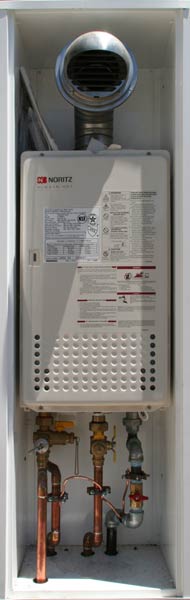 |
A tankless water heater heats water very rapidly, on demand. When a hot water tap is turned on, water begins to flow and is detected by the water heater. A water pipe winds back and forth through the heat exchanger and water quickly reaches the desired temperature. Once hot water begins flowing, it will continue until the hot water tap is turned off. This is how unlimited hot water is supplied. With a traditional tank style water heater, 40 to 50 gallons of water is kept hot until it is needed. When hot water is used, it is drawn from the storage tank. The heater also begins heating water, but it cannot heat water as quickly as it is being used. So, once the stored supply is used up, the water temperature drops dramatically.
Save Money and Save the Environment
Because demand water heaters don't heat water until water flow is detected, no energy is wasted keeping water hot. Tank style heaters store hot water and periodically fire up to reheat water, day and night. This constant reheating of water is very wasteful. A demand water heater can reduce utility bills while reducing the emission of carbon monoxide and other pollutants.
There is another consideration, if you have unlimited hot water, will you start taking longer showers? Many of us are used to taking a shower of 5 minutes or so, because after that the water starts to get cold. If you aren't forced out by cold water, will you stay for an extra minute or two? An extra two minutes, added to a 5 minute shower, results in 40% more water usage and the energy required to heat the water. In other words, you could wipe out any utility savings just by lingering in the shower. On the other hand, heating water day and night creates a lot of waste, so a little extra time in the shower may not wipe out all the savings. Exact numbers depend on the hot water usage patterns in your home and the efficiency (or inefficiency) of your tank style water heater.
Facts and Myths about Demand Water Heaters
Old myths about tankless water heaters persist and discourage some people from ever considering one for their home. Let's clear up some misconceptions. First, demand water heaters are sometimes called instantaneous water heaters. The name leads to a common misconception, that hot water comes out of the tap instantly. Not true. Just as with a tank water heater, hot water must travel through your home's plumbing system before it reaches the tap. If it takes 60 seconds for hot water to reach your tap with a tank heater, it might take 70 seconds for a tankless heater. The extra few seconds is the time it takes a tankless unit to sense hot water demand, fire up the burner and bring the first bit of cold water up to the required temperature. There are ways to get instant hot, including the use a recirculation pumps, locating the water heater close to where the water will be used or with similarly named product which is typically used only with a sink.
Page 1 of 2


